
非主流
网传河北一地“白菜装车前蘸甲醛” 当地通报:属实 紧急追溯流向_我的网站

一 | Wave of listings highlights new growth engines Chinese humanoid robot maker Unitree Robotics opened subscriptions for its initial public offering on the Shanghai Stock Exchange's sci-tech innovation board, or STAR Market, on Monday, as the market witnessed a broader economic shift with future industries expected to power the country's next wave of economic growth. President Xi Jinping, who is also general secretary of the Communist Party of China Central Committee, said in an article published in June in the Qiushi Journal, a flagship magazine of the CPC Central Committee, that cultivating and developing future industries are of great significance for seizing the development initiative, developing new quality productive forces and improving people's quality of life. Efforts should be made to vigorously foster first-class scientific, technological and high-tech enterprises that excel in core technologies and possess strong innovation capacities, Xi said. For decades, China's economic expansion was powered largely by traditional industries, infrastructure investment and manufacturing scale. But the next wave of growth is increasingly expected to come from future industries, including embodied intelligence, future energy, quantum technology, brain-computer interfaces and 6G, which have been highlighted as key areas in China's 15th Five-Year Plan (2026-30). Since leading semiconductor firm ChangXin Memory Technologies debuted on the STAR Market in late July, a number of companies including artificial intelligence chip developer Enflame Technology, semiconductor manufacturer Can-Semi Technology, commercial rocket maker LandSpace and AI chip company Kunlunxin have been moving toward potential listings. Behind the wave of listings is not just a reshuffle of capital market preferences, but a transformation in the sources of future economic growth. Hu Yongjun, secretary-general of future industries and platform economy research center under the State Information Center, said: "Developing future industries is a key move in driving industrial transformation and upgrade. Technologies that appear to be in an exploratory stage today could become engines of economic growth over the next decade or more." He said that future industries will fuel China's economic growth through new trillion-yuan-level industries that will come about as emerging technologies transform into commercial applications, and traditional industries are upgraded by integrating technologies such as AI, digitalization and low-carbon solutions. "More importantly, future industries are not simply about developing several new products. They could accelerate upgrades across an entire industrial chain, from core components to end-user applications," he said. A humanoid robot illustrates this ecosystem effect. Behind a single robot are dozens of interconnected sectors, including AI models, chips, sensors, precision reducers, motors, batteries, new materials, industrial software and intelligent manufacturing equipment. China's electric vehicle industry offers a similar example. Over the past decade, the rise of new energy vehicles has reshaped the global auto industry while driving rapid growth in power batteries, energy storage materials, intelligent driving technologies and automotive chips. In addition, the Unitree IPO and other upcoming listings represent a broader reallocation of capital toward technologies that may require years of investment before generating large-scale commercial returns. Xi also stressed efforts to improve fiscal and taxation policies, vigorously develop technology finance, and optimize government procurement and talent cultivation, introduction and utilization to foster a robust environment that encourages innovation. Tian Xuan, dean of Peking University's Guanghua School of Management, said: "China is transiting from factor-driven growth toward innovation-driven development. Capital is moving beyond its traditional role of financing capacity expansion in mature industries and increasingly taking on the earlier-stage, longer-term uncertainty involved in building future industries." As of June 2026, the STAR Market had attracted 609 hard technology companies, with total funds raised through IPOs and refinancing exceeding 1.37 trillion yuan ($203 billion). More than 40 listed companies on the market have also entered cutting-edge fields such as quantum technology, 6G and biomanufacturing. The China Securities Regulatory Commission has also introduced a regular "green channel" mechanism for IPO financing and mergers and acquisitions involving technology companies in strategically important core technology areas. For instance, Unitree Robotics moved rapidly through the listing process, taking less than four months to go from the application acceptance stage to approval, marking the fastest review under the STAR Market's preliminary review mechanism since its implementation. "Amid the rapid development of AI, rising geopolitical tensions and a growing emphasis on strategic security, China needs to build a financial system better aligned with the development of new quality productive forces," Tian said. "This requires expanding the supply of patient capital, improving market structures, enhancing policy predictability and reducing resource misallocation, thereby providing sustained and solid financial support for innovation," he added. 
 。 今天,河北省张家口市康保县人民政府发布情况通报: 针对网上反映的“白菜收购环节蘸取甲醛溶液”相关问题,康保县第一时间组织农业农村、市场监管、公安等部门开展实地核查调查。

二 | 经初步核查,视频反映情况属实,系收购商为蔬菜运输保鲜,在装运过程中的违法行为。

三 | 目前,公安部门已对相关人员、车辆依法采取强制措施,案件正在进一步侦办中。同时,对涉事白菜流向进行紧急追溯,并举一反三,对全县蔬菜收购、运输、销售环节开展全面深入排查,对发现的违法违规行为依法严肃查处,切实保障蔬菜供应安全。 此前报道 河北张家口市场监管局回应“博主曝光大白菜装车前蘸甲醛保鲜”:关注到相关情况 多部门已展开调查 8月22日,博主“渔猎齐哥”发布视频称,在河北张家口市康保县屯垦镇,随机挑选多个大白菜装载挂车,均存在装车前蘸取甲醛溶液用于保鲜的情况。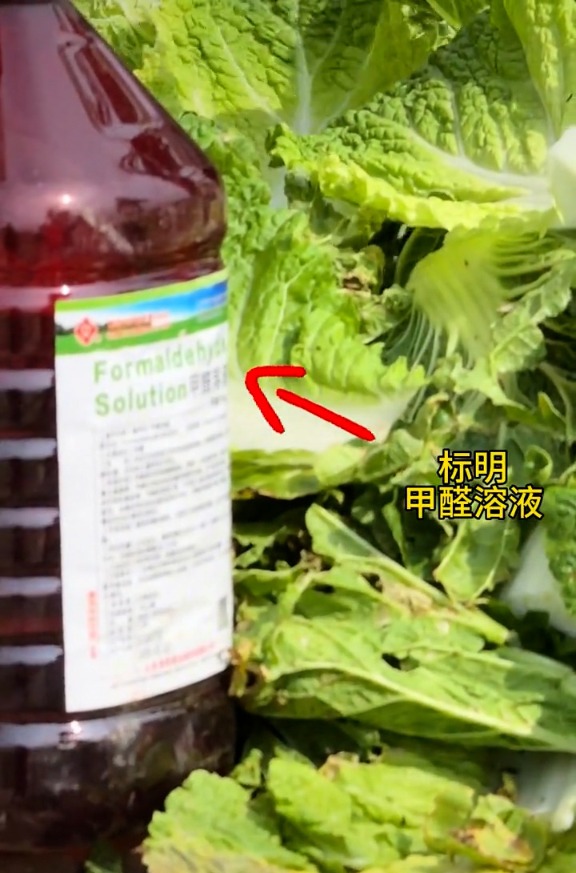 视频中拍摄到装载白菜的货车上有标注“甲醛溶液”的瓶子 其中,视频中拍到一辆正在装车的货车司机表示,这车大白菜将运往江苏宿迁。还有一现场人员表示,蘸取甲醛溶液后能保鲜"2—3天"。视频最后,该博主表示已在合肥某市场的大白菜中检测出了甲醛,确认是从河北运来的大白菜。
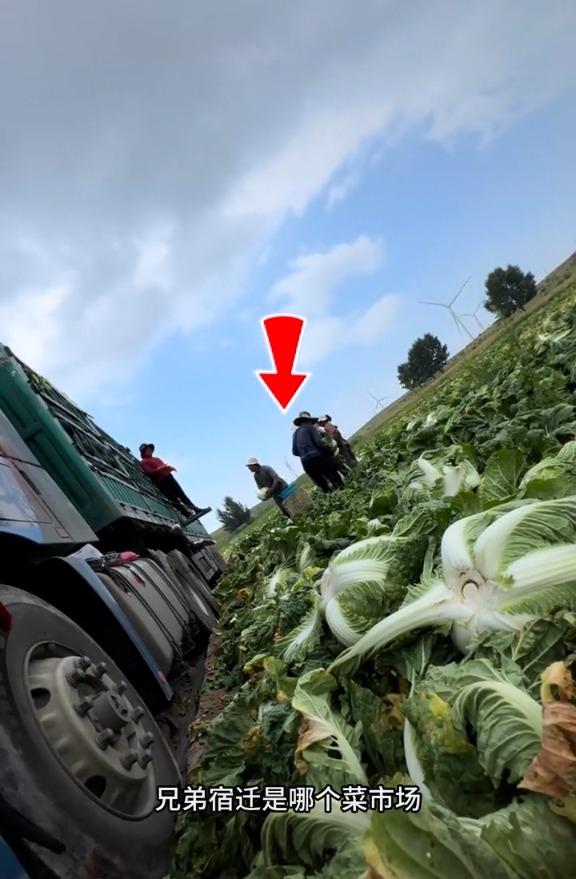 视频中拍摄到装车人员疑似在蘸取甲醛溶液 8月22日上午,澎湃新闻致电河北张家口市市场监督管理局,接线工作人员表示,已注意到相关情况,目前市场监督管理局、当地农业局及警方均已介入调查。 澎湃新闻注意到,据“科普中国”此前发布的报道显示: 蔬菜中的甲醛可以分为内源性和外源性两类。 内源性的甲醛是生物代谢过程中产生的,自然存在于许多食物中,如蔬菜、菌菇、水果、肉类、鱼类等。

四 | 这类甲醛含量极少,基本对人体不会产生危害。 外源性的甲醛是在食物加工、运输、销售过程中由于人为不当使用产生的,是造成食品甲醛污染问题中的主要原因。个别不法菜贩子向蔬菜根部喷洒稀释后的甲醛,不但可以减少蔬菜长途运输过程中的发热腐烂现象,还会使其根部白净,更受购买者的喜爱。 我国《食品安全法》及《农产品质量安全法》中明确规定,甲醛不得作为食品用加工助剂生产经营和使用。

五 | 也就是说,以任何方式在食品中添加甲醛的行为都是违法的。 此外,“科普中国”文章中还提到:甲醛每日允许摄入量为0.2毫克/公斤体重。按体重60千克计算,甲醛的每日允许摄入量总值为12毫克。广州的一项调查显示,当地农贸市场所有蔬菜甲醛的平均含量为0.272毫克/千克。如不考虑其他食物的甲醛摄入,甲醛摄入要超过每日允许摄入量,需要一天吃44.118千克蔬菜才行。 甲醛是一种容易挥发的物质,而且如果蔬菜上真有很高浓度的甲醛,不用放在鼻子底下就能闻到了。如果觉得自己可能买到了有甲醛的蔬菜,不放心的话,最好扒掉外层叶子,用清水泡洗几遍,时间允许的情况下也可以再多煮几分钟。(文章来源:央视新闻)。
Current article:http://jfrpge.yizhougengcuohei.cyou/list_a19/m3w7te.html
Published on:08:49:07
 刺客信条
刺客信条 欢乐颂
欢乐颂