第八号当铺
China opens exhibition to preserve, bring linguistic diversity to life_我的网站

A | 「お箸を正しくもつ」「自分で歯を磨く」「整理整頓をする」「ありがとうを伝える」…など、小学校入学前後に知っておきたい93のおやくそくを紹介した書籍『まいにちがたのしくなるおやくそく できるかな?』が発売された。「小学校入学準備にぴったり」「生活の基本だが、これまでどう教えればいいのかわからなかったので助かる」など多くの口コミが寄せられている。本書では、生活のきほんや言葉づかい、心の守り方、学校での過ごし方まで子どもたちの毎日に欠かせないテーマを幅広く網羅している。

A visitor listens to dialects of various regions in Hunan at the Exhibition Hall of the Project for the Protection of Language Resources of China in Changsha, central China's Hunan Province, Aug. 24, 2026. A new exhibition hall dedicated to the preservation of China's diverse language resources opened on Monday in Changsha, capital of central China's Hunan Province, bringing a decade-long effort to document languages and dialects to the public through digital and interactive displays. The Exhibition Hall of the Project for the Protection of Language Resources of China, located in the Hunan Museum, brings together recordings and other language materials collected from more than 1,800 field survey sites across China, covering Chinese dialects, ethnic minority languages and related cultural traditions. (Xinhua/Xue Yuge)Putting on headphones at a new exhibition hall in central China, visitors can hear a chorus of voices from across the country, including regional dialects, traditional songs in ethnic minority languages and field recordings of languages on the verge of extinction.
The Exhibition Hall of the Project for the Protection of Language Resources of China opened Monday in Changsha, capital of central China's Hunan Province, bringing decade-long efforts to document languages and dialects to the public through digital and interactive displays.
Located in the Hunan Museum, the exhibition brings together recordings and other language materials collected from more than 1,800 field survey sites across China. More than 30 language-related cultural relics are also on display.
The recordings represent 10 major Chinese dialects and more than 100 ethnic minority languages, including Mongolian, Tibetan, Uygur and Zhuang, said Chen Xuliang, deputy Party secretary of the Hunan Museum.
"Digital technology is helping bring the results of language preservation research out of databases and into public cultural spaces," he said.
The exhibition draws on materials collected through a national language preservation project launched in 2015 to document and preserve the country's diverse languages and dialects. It is the world's largest project of its kind, according to experts.
Over the past decade, researchers have traveled to remote mountain villages and pastoral areas to find native speakers of different ages. They systematically recorded words, grammatical examples, oral traditions and other language materials, turning oral memories at risk of disappearing in digital records that can be preserved for generations.
The work has become increasingly urgent as the number of native speakers of some languages declines.
China is home to more than 100 languages and numerous dialects. Some languages, including Hezhen and Manchu, now have fewer than 100 speakers.
Economic integration, population mobility and the social changes they bring are making it increasingly difficult to preserve languages and cultural traditions around the world, said Wang Lining, a professor at Beijing Normal University's School of Chinese Language and Literature and a participant in the language preservation project.
Many languages lack well-developed writing systems, Wang said, meaning knowledge and memories passed down orally can be lost when their speakers die.
The new exhibition aims to bring such preservation work closer to the public. It also promotes the principles of the "Yuelu Proclamation," which was officially released in 2019 and described as UNESCO's first permanent document themed on the protection of linguistic diversity.
Experts attending the exhibition's opening said a key challenge is how to use artificial intelligence and digital museum technologies to turn vast collections of field recordings into cultural experiences the public can engage with.
For Wang, documenting endangered languages is only the beginning.
"In the past, the focus was on recording endangered languages and preserving samples of their voices," she said. "In the future, preservation needs to move toward keeping languages alive."
The exhibition hall, Wang said, is part of that shift, taking language resources beyond academic research and bringing them closer to everyday life.

People visit the Exhibition Hall of the Project for the Protection of Language Resources of China in Changsha, central China's Hunan Province, Aug. 24, 2026. A new exhibition hall dedicated to the preservation of China's diverse language resources opened on Monday in Changsha, capital of central China's Hunan Province, bringing a decade-long effort to document languages and dialects to the public through digital and interactive displays. The Exhibition Hall of the Project for the Protection of Language Resources of China, located in the Hunan Museum, brings together recordings and other language materials collected from more than 1,800 field survey sites across China, covering Chinese dialects, ethnic minority languages and related cultural traditions. (Xinhua/Xue Yuge)
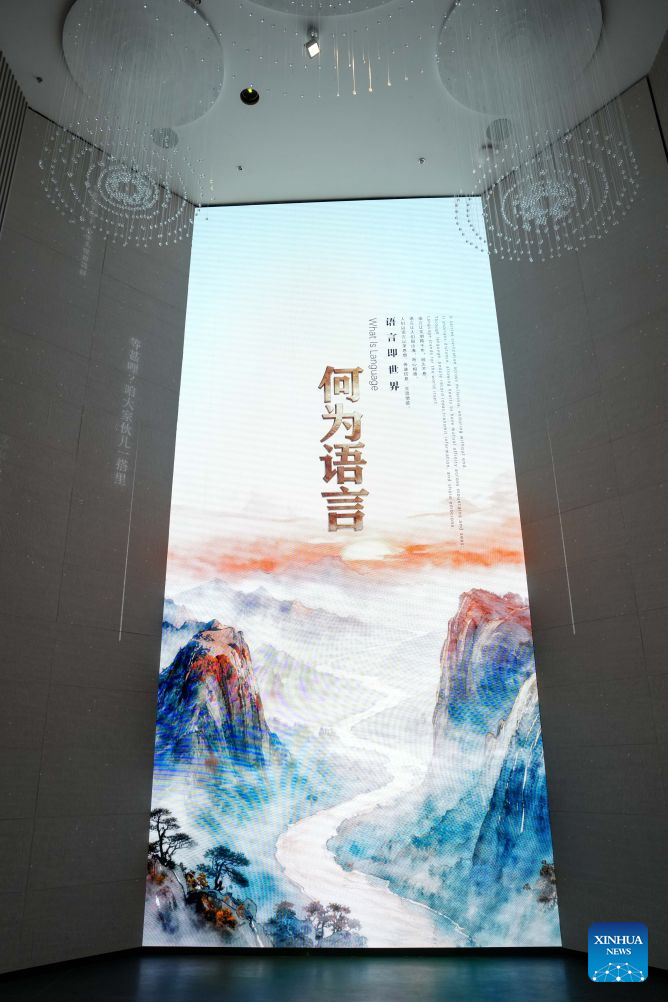
This photo taken on Aug. 24, 2026 shows an interior view of the Exhibition Hall of the Project for the Protection of Language Resources of China in Changsha, central China's Hunan Province. A new exhibition hall dedicated to the preservation of China's diverse language resources opened on Monday in Changsha, capital of central China's Hunan Province, bringing a decade-long effort to document languages and dialects to the public through digital and interactive displays. The Exhibition Hall of the Project for the Protection of Language Resources of China, located in the Hunan Museum, brings together recordings and other language materials collected from more than 1,800 field survey sites across China, covering Chinese dialects, ethnic minority languages and related cultural traditions. (Xinhua/Xue Yuge)

Children perform at the opening ceremony of the Exhibition Hall of the Project for the Protection of Language Resources of China in Changsha, central China's Hunan Province, Aug. 24, 2026. A new exhibition hall dedicated to the preservation of China's diverse language resources opened on Monday in Changsha, capital of central China's Hunan Province, bringing a decade-long effort to document languages and dialects to the public through digital and interactive displays. The Exhibition Hall of the Project for the Protection of Language Resources of China, located in the Hunan Museum, brings together recordings and other language materials collected from more than 1,800 field survey sites across China, covering Chinese dialects, ethnic minority languages and related cultural traditions. (Xinhua/Xue Yuge)
。その中から「靴のそろえ方」について取り上げる。(構成/ダイヤモンド社書籍編集局・佐藤里咲) 【この記事の画像を見る】 Photo: Adobe Stock ● はじめて友だちの家に行ったときに「やらかしたこと」 母に怒られた記憶が今でも鮮明によみがえる。 小学1年生になったとき、私は初めて一人で友だちの家に遊びに行った。友だちのお母さんが作ってくれたホットサンドを食べ、テレビゲームをして、夢中になって遊んでいた。 そのとき、玄関のインターホンが鳴った。母が迎えに来たのだ。 しばらくして部屋に入ってきた母は、私の様子を見るなり顔色を変えた。 「こんなことしちゃだめじゃない!」 突然強い口調で叱られ、私は何がいけないのかわからず戸惑った。 母に手を引かれて玄関に向かうと、私のスニーカーが脱ぎ捨てられていた。

B | 私は靴をそろえず、そのまま家に上がっていたのだ。 母はしゃがみ込み、靴をそろえながらこう言った。 「玄関で靴を脱いだときはきれいにそろえるんだよ。自分の家でももちろんだけど、お友だちの家におじゃまするときは、もっと大切なことなの。

C | 」 それ以来、私はどこに行っても玄関で靴をそろえるようになった。● 靴をきれいにそろえよう 小学校入学前後に知っておきたい93のおやくそくを学べる本『まいにちがたのしくなるおやくそく できるかな?』には、「くつをきれいにせいりしよう」という項目がある。靴のそろえ方だけでなく、日々の管理の仕方まで具体的に説明されている。

D | ① ぬいだ くつは そろえよう。② ドアの ほうに つまさきを むけるよ。③ はかない くつは げたばこに しまおう。④ よごれた くつは よけておいて あとで あらおう。(『まいにちがたのしくなるおやくそく できるかな?』p.41より引用)。 大人になって実感するのは、こうした何気ないふるまいほど、その人の習慣や人への向き合い方が表れるということだ。だからこそ「靴をきれいにそろえる」という基本を、子どものうちから自然に身につけておきたい。
Current article:http://jfrpge.yizhougengcuohei.cyou/cjvtk/tfnv4.html
Published on:00:38:08