


58同城
What the West's assimilation accusations against China reveal about its own historical burdens_我的网站

一 | 专业医护、热水、Wi-Fi、免费理发、看电影,还有儿童学习区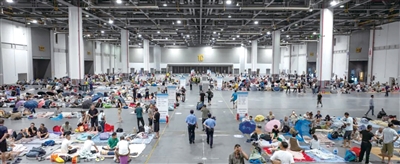 国博安置点为全力做好台风“白海豚”防御工作,杭州全市2467个在建工程全面停工,大批工人全部及时、有序转移至安全避险场所。

二 | 各类应急抢险队伍也进入临战状态,调配大型挖掘机、排涝设备等救援装备随时待命。

三 | 昨日,滨江白马湖会展中心紧急腾出场馆,变身临时避灾安置点,接纳周边工地建设工人。

四 | 物业负责人李先生告诉记者:“原本B馆一楼还在举办全国青少年航天创新大赛总决赛,接到紧急通知后,比赛场地改成了临时安置点,腾出来给工友们落脚。

五 | (ECNS)-- China's newly implemented Ethnic Unity and Progress Promotion Law has elicited a predictable response from certain Western media outlets. Whenever ethnic unity is referenced, some Western critics rush to frame it as "assimilation" or a push for uniform national identity. Fan Yichou, associate professor at the Law School of Minzu University of China, argues that such misinterpretations arise primarily from projecting Western historical nation-state building trajectories onto China's ethnic policies. Put simply, some Western observers do not view China from the perspective of its domestic social realities, but rather judge it through the lens of their own historical experience. Fan argued that the traditional Western nation-state model rests on a core premise: one ethnic community ought to align with one sovereign state, with political boundaries largely overlapping ethnic territories. To build culturally homogeneous nation-states, most Western powers historically sought to eradicate internal ethnic diversity through assimilation, exclusion, and other coercive measures. Such nation-building drives were often accompanied by territorial conquest, mass population displacement, and systemic violence. He drew on arguments laid out by Canadian political philosopher Will Kymlicka, who observes that the classical European template of nation-building rested on an implicit consensus: states should strive to become culturally homogeneous, by either assimilating national minorities or expelling them. For centuries, this ideal of a mono-national state shaped state policy across almost all Western European countries, with Switzerland stands out as the only major exception. This deep-rooted historical trajectory continues to frame contemporary discourse on ethnic governance. A stark modern illustration emerged in 2025, when Danish local authorities took away the newly-born daughter of an 18-year-old Inuit mother from Greenland just one hour after birth following a controversial parenting competency assessment. Her case was far from isolated. According to reports by the BBC and other media outlets, another Greenlandic mother had all three of her children under state custody. She was first subjected to a so-called parenting competency test after social services raised concerns about the language development of her eldest daughter. Although the Danish government has decided to stop using such tests on Greenlandic families, local authorities have yet to halt the practice. The enduring harm of assimilationist policies extends far beyond this Danish case. UNESCO’s Memory of the World archives document that Canada's Indigenous residential school system continuously operated for nearly 150 years, with the explicit state objective of assimilating Indigenous children into settler society. Generations of Indigenous children were forcibly separated from their families, severed from their ancestral languages, cultural traditions, and intergenerational knowledge systems. The United States has grappled with comparable challenges. According to a 2025 Associated Press report, Native American children in California are roughly about four times more likely to enter the foster-care system than their peers. Newborns separated from their mother shortly after birth. Generations of children torn apart from their families and ancestral languages. Indigenous youth who remain vastly overrepresented in foster-care placements to this day. All these are legacies of the West's long-standing obsession with assimilation. That explains why, when some in the West hear China speak of "ethnic unity," they instinctively equate it with "assimilation." In reality, they are projecting their own social trauma onto China. China's context, however, is fundamentally different. As Fan Yichou notes, China has long been a unified multi-ethnic country. Within the Chinese tradition, political unity has not demanded cultural uniformity. Instead, unity and diversity have coexisted across most of the nation's history. This outlook finds theoretical expression in the concept of plurality-in-unity put forward by renowned Chinese sociologist Fei Xiaotong. In his framework, China's 56 ethnic groups represent the plurality, whereas the Chinese nation embodies unity. From this perspective, the Ethnic Unity and Progress Promotion Law is not designed to eliminate ethnic differences. Instead, it seeks to strengthen a shared sense of belonging while respecting cultural diversity. This distinction highlights a broader divergence between China and the West in approaching identity and social cohesion. In many Western societies, historical assimilation sought to diminish group differences and compel minority groups to conform to dominant-culture norms. By contrast, China's emphasis on forging a strong sense of community for the Chinese nation is not intended to obliterate diversity. It seeks to build shared civic and national identity, while enabling all ethnic groups to sustain their own languages, customs, and cultural traditions. Ethnic groups may speak different languages, practice different customs, and vary in development level. Yet they can still uphold shared dedication to national progress and a common sense of belonging within a unified multi-ethnic state. Genuine ethnic unity does not require everyone to fit into the same mold. It means ensuring that different ethnic groups can participate in national development while maintaining their own cultural characteristics and thriving with equal dignity and equitable opportunities. So when some in the West equate China's "ethnic unity" with "assimilation," their judgment stems not from an accurate assessment of China’s reality, but from a subconscious projection of their own historical burdens, contemporary social anxieties, and deep-rooted institutional scars onto China's ethnic policies. They are either unwilling or unable to fully comprehend China's governance philosophy and practices, yet arbitrarily pass arrogant judgment on the country. The outcome of this biased approach will be no exception of absurd narratives that fundamentally contradict objective reality. 
 。”因为人手紧张,物业全员连轴转,李先生通宵未合眼。“昨天第一批来了370人,加上今天陆续抵达的,现在总共安置了1822人,全是附近各个工地的务工人员。”李先生说,工作人员和保安轮岗巡查,保洁24小时在岗。为保障工友休息,晚上9点半场馆调暗灯光,10点只保留应急照明。

六 | 场馆24小时提供开水、空调、供电等,吃饭喝水由各工地项目部统一安排,还有测血压、公益理发等服务。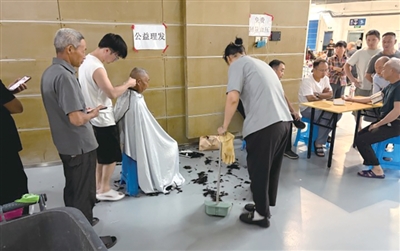 白马湖会展中心提供免费理发和测血压下午,安置点大部分工友躺着休息,刷视频、玩游戏、打牌。“平时都忙得很,台风来了,反正没什么事,可以放松娱乐一下。”一位工友说。10岁男孩小谢坐在席子上看平板电脑。

七 | 他的父亲谢师傅说,儿子上五年级,来杭州过暑假,计划8月底回老家上学,刚来第二天就遇上了台风。谢师傅43岁,老家重庆,高中毕业就外出务工,在杭州将近三十年,从最开始在工地做小工,如今已是项目主管,日薪三百到四百元。他工作的滨江“乐其”建设项目还有一年多完工,工人来自全国各地,昨天一早他和80多个工友一起转移到这里。“以前干小工,能挣一天32块钱都特别开心,现在杭州建设越来越好,工资、就业机会都比早年好得多。”这些年谢师傅辛苦赚的钱都寄回了家里,现在大儿子21岁,也在杭州打工,身边这个是小儿子。

八 | “男人嘛,就是要拼的嘛。

九 | ”谢师傅说,小儿子春节到现在还是第一次见面,成绩在班里名列前茅。“我跟他说好,成绩好就能适当玩一下电子产品,时代不一样了,不能拿我们小时候的标准来约束孩子。”54岁的泥工王师傅坐在一旁休息,他来自地铁18号线项目工地。“我来杭州十来年了,这些年跟着项目在杭州到处跑,忙是真忙,今年开春到现在都没好好休息过。上一次台风也是在这里,这边都挺好的。”王师傅来自安徽阜阳,他说上面有三位老人要赡养,老婆在老家守着4亩多地,春夏种小麦,这个时节种玉米。

十 | 儿子20岁出头,已经在一家电子厂上班。

十一 | 尽管儿子已经能挣钱,但王师傅说压力还是不小,“以后买房、买车、结婚,还是得我们帮衬……”一位工友提着六瓶啤酒和小吃,“一共14.5元,项目公司给我们准备了方便面和水,这不晚上没事嘛,大家凑在一起喝点”。一位大姐刚从外面回来,手里拿着很多馒头,尽管淋了雨,脸上笑呵呵的。她说自己老家河南,刚去超市看到有馒头,特意买回来给大家分着吃。“仁安”项目的三个黄山老乡围在一起,一边吃着“猫耳朵”,一边闲聊。“一到安置点我就给家里打电话报了平安,这边一切都好,老家那边每年汛期都让人揪心。”木工老陈说。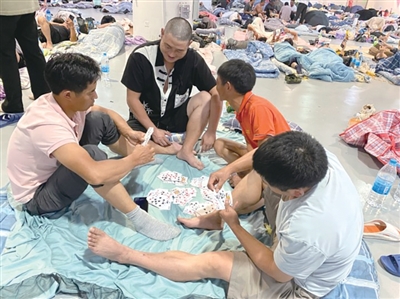 工友们休息的休息,打牌的打牌。二楼“联吉生产基地”项目安置点附近,一箱箱方便面、矿泉水堆放得满满当当,“今天一早全部备好的,方便面30多箱,饮用水20多箱,够大家今天一天了。

十二 | ”项目安置点管理人员孔先生说。

十三 | “项目快两年了,工期还有几个月。这次到安置点的有90多个工友,来自全国各地。”记者离开时,外面的风刮得呼呼作响。一位工友蹲坐地上,透过落地窗看着对面的地铁18号线在建工地,又回头看看室内。“台风来了其实也没什么,我们该吃就吃,该喝就喝,就当休息几天。

十四 | ”钱江世纪城辖区53个在建项目全部停工,近万工人昨天已完成转移,其中5000余人来到国博安置点。台风“巴威”时,这里也是数千工友的避风港。2019年迎战台风“利奇马”以来,国博多次承担大规模避险保障任务,应对措施越来越纯熟。按区块划分铺位,由施工单位24小时现场管理。

十五 | 专业医护、消杀保洁、24小时热水、Wi-Fi全覆盖、增设充电插排和共享充电宝、开辟盒饭配送通道,还有观影区和儿童学习区……“这个地方空间大,凉快,吃喝都安排好了,刚跟家里打视频报了平安,在这里我们心里很踏实。”一位工友说。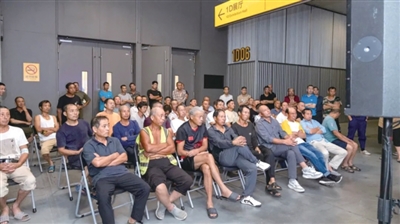 国博安置点的观影区根据之前台风“巴威”的转移经验,这次安置点把原来的VIP休息室,改造成了约30平方米的“儿童学习区”,十几套白圆桌与色彩明快的椅子错落排开,暖黄色的台灯洒下柔光,相比展厅的喧闹,这里蛮安静。儿童学习区一角,刘女士正陪10岁的大儿子写作业,5岁的小儿子安静地窝在她怀里翻着绘本。趁着暑假,她带两个孩子从云南来到杭州工地看爸爸,没想到遇上台风,一家人一起来到国博安置点。“一开始还担心孩子没地方待,没想到这里有专门的学习区,哥哥能写作业,弟弟也有绘本看。”刘女士说,原本以为台风天手忙脚乱,来了之后才发现,比想象中安稳得多。
Current article:http://jfrpge.yizhougengcuohei.cyou/0781t/dhf.html
Published on:02:06:37
 潮讯:苹果将推出iPhone月租服务;真我国内全线产品已停产;OPPO、vivo拒绝三星新一季度存储报价;耐克将清退中国数千家在线经销商
 冲刺四季度丨抚顺县:全力推进文旅融合高质量发展
 韦东奕主编练习册,迫于压力下架?
 大中城市巡回招聘4月27日举办 200家企业虚位以待
 US Publisher: What if COVID Outbreak is Part of the Pentagon's Biowarfare Plan?
 新起点、新机遇、新突破——澳门各界期盼“三五”规划开创高质量发展新局面
 四进决赛未能开走保时捷,萨巴伦卡:很高兴自己买得起这辆车
 一顿“蹭来”的晚饭,80后海归拿到千亿赛道门票
 微软新视频揭开Microsoft 365面纱 即将替代Office
 希尔顿集团在华运营酒店突破1100家
 五一外出游玩 避开这些消费陷阱!
 新国标为小微型企业量身打造安全生产“极简实用”管理体系,新国标为小微型企业量身打造安全生产“极简实用”管理体系